
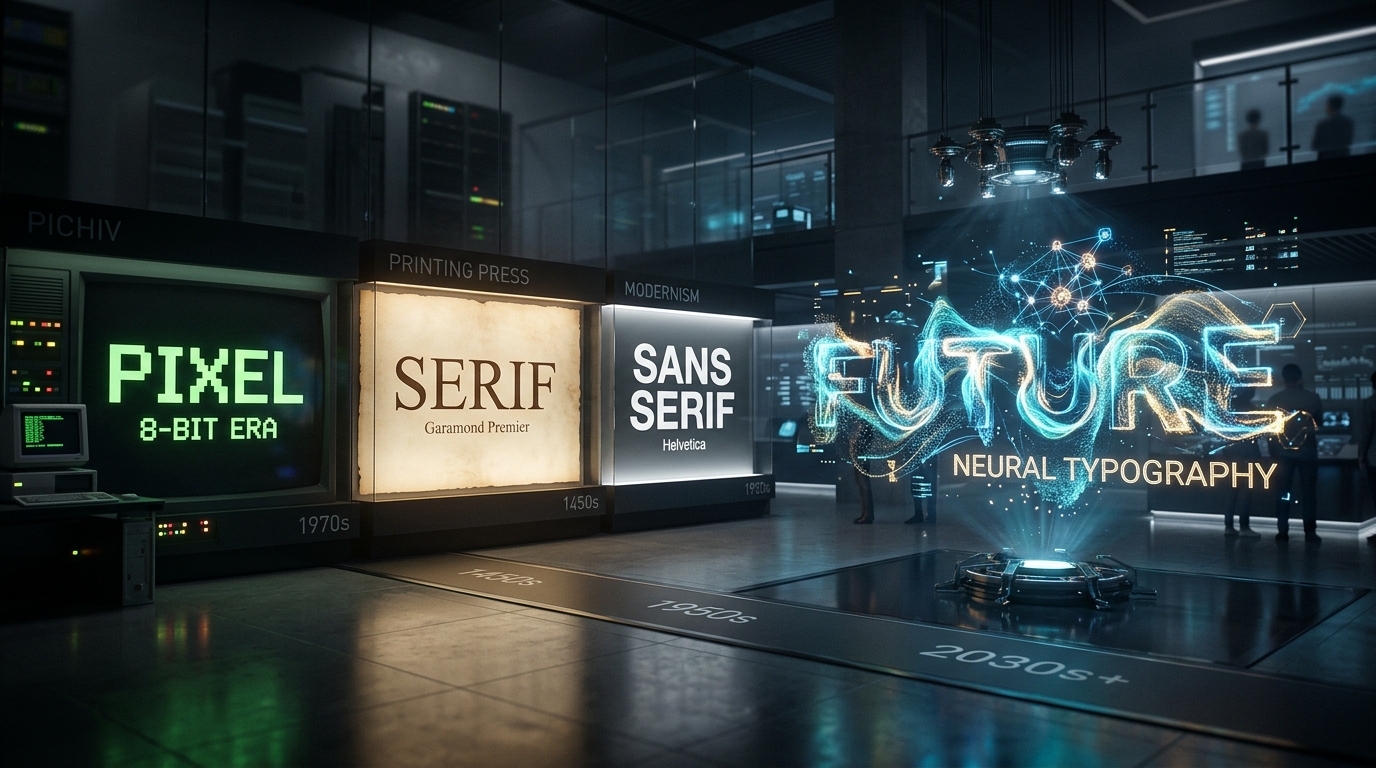
Typography has always influenced how people understand written communication. A newspaper headline, a business document, and a handwritten invitation can contain similar words but create completely different impressions because of their typography. As technology has evolved, digital fonts have transformed from basic computer necessities into powerful tools for creativity and personal expression.
Early computers offered relatively limited typography options. Users typically worked with a small collection of system fonts designed primarily for readability. Digital text was functional rather than decorative, and changing its appearance often required specialized software or knowledge of graphic design.
The development of desktop publishing changed this situation. As computers became more capable, designers gained access to hundreds and eventually thousands of typefaces. Programs for creating documents, advertisements, websites, and graphics allowed users to select fonts according to the purpose of their projects.
The internet accelerated this evolution. Websites began using different typography to establish their visual identities. Businesses selected distinctive fonts for branding, while designers experimented with combinations of typefaces to create unique layouts. Digital typography became an important part of web design.
The rise of social media created another major shift. Platforms such as social networks, messaging services, and online communities gave users new reasons to personalize their text. People wanted usernames, bios, captions, and posts that stood out from ordinary content.
However, many social platforms do not provide extensive font customization. This created demand for online text generators. Instead of installing a font directly into a social media application, users can enter ordinary text into a generator and receive alternative versions that can be copied and pasted.
Many of these tools rely on Unicode characters rather than traditional font files. Unicode is a global character-encoding standard designed to represent text across different writing systems and computing environments. Certain Unicode characters can visually resemble bold, italic, script, mathematical, or decorative styles.
This technology makes creative typography much more accessible. A user does not need Photoshop, Illustrator, or a professional typography application. They can simply open an online generator, type their message, select a style, and copy the result.
Cursive text is especially popular because it can create the appearance of handwriting without requiring a handwritten image. It is commonly used for social media profiles, invitations, digital artwork, usernames, personal messages, and creative projects.
Modern text generators are also becoming more sophisticated. Instead of providing only a handful of styles, many tools offer extensive collections of variations. Some focus on cursive and script appearances, while others provide bold, aesthetic, gothic, monospace, bubble, or decorative alternatives.
The evolution of digital fonts demonstrates how typography has moved from a technical computer feature to a form of digital self-expression. People now use text appearance to communicate personality, mood, identity, and creativity.
There are still differences between traditional fonts and generated text. A conventional font changes how characters are rendered while keeping the underlying text generally the same. Unicode-based generators may replace ordinary characters with different Unicode symbols. This distinction can affect accessibility, searchability, and compatibility.
Nevertheless, creative text generators have made digital typography easier for everyday users. They represent the latest stage in a long development that began with simple computer typefaces and progressed through desktop publishing, web fonts, and social media customization.
As technology continues to advance, typography will likely become even more interactive and personalized. Digital fonts are no longer limited to professional designers. Today, anyone with an internet connection can experiment with creative text and develop a distinctive digital style.