

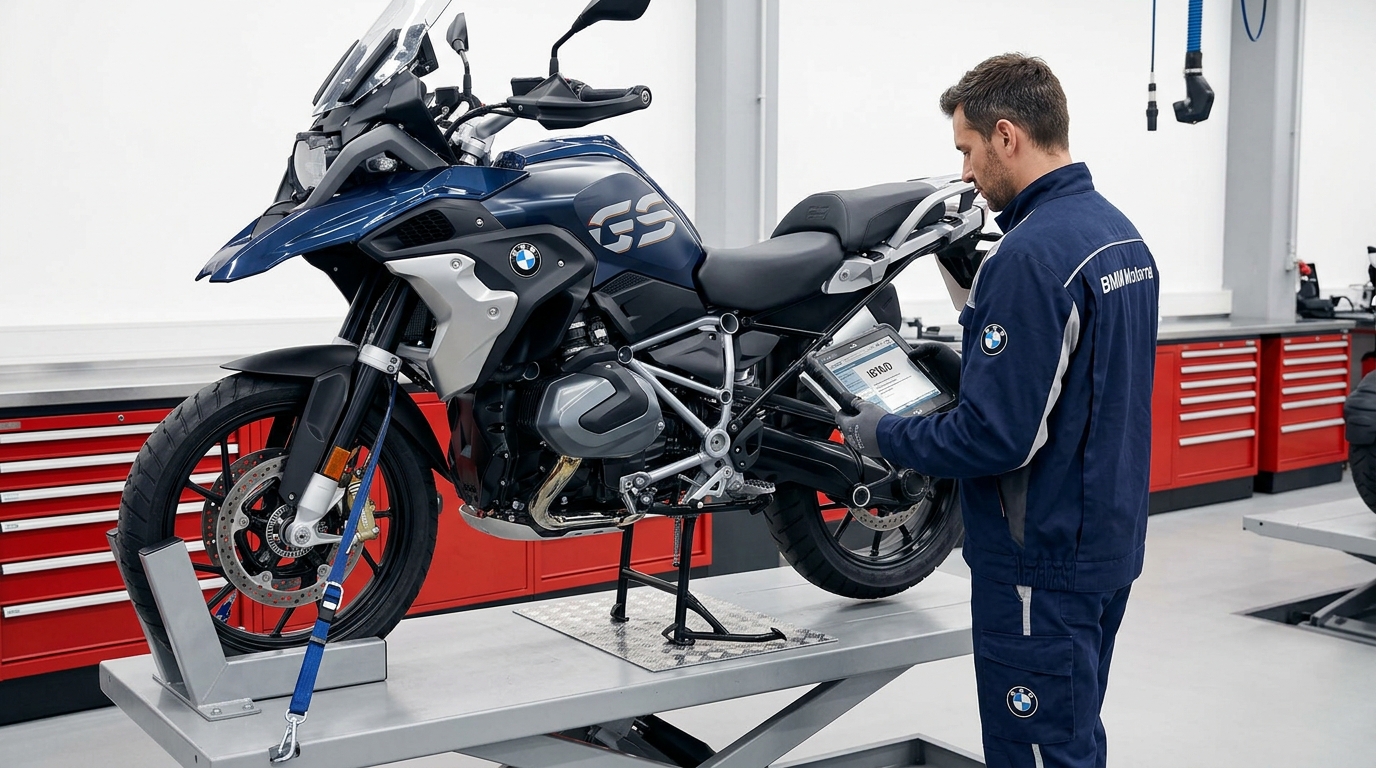
Motorcycles offer a distinctive combination of mobility, efficiency, mechanical simplicity, and direct involvement with the road. For many riders, that connection is exactly what makes motorcycling appealing. However, riding also demands greater awareness because a motorcycle provides far less physical protection than a conventional passenger vehicle.
Responsible motorcycle ownership therefore involves more than choosing an attractive bike. Riders need to understand basic maintenance, tire condition, braking, protective equipment, road positioning, weather, visibility, and their own skill limitations. Developing good habits in these areas can make everyday riding more predictable and manageable.
Table of Contents
Choose a Motorcycle That Matches Your Experience
Motorcycles vary enormously in weight, power delivery, riding position, handling, seat height, and intended purpose. A bike that suits an experienced rider may not necessarily be appropriate for somebody who is still developing basic riding skills.
Before buying, think about where and how the motorcycle will actually be used. Daily commuting, long-distance touring, urban riding, occasional recreation, and sport-oriented riding can require very different characteristics.
Engine capacity alone does not tell the complete story. Overall power delivery, motorcycle weight, throttle response, ergonomics, braking systems, and rider-assistance technology can all affect how manageable a bike feels.
Enthusiasts researching different motorcycles and performance-related topics may encounter resources such as Fastest Motorcycle while exploring the wider motorcycle world. Performance can be interesting to study, but suitability for the rider and intended use should remain central to a purchase decision.
Prioritize Fit and Riding Position
A motorcycle should feel physically manageable. When sitting on a potential bike, consider whether the controls are comfortable to reach and whether the riding position feels sustainable.
Seat height can be particularly important for riders who need greater confidence during low-speed maneuvering or when stopping. Handlebar position, footpeg placement, seat shape, and fuel-tank width can also influence comfort.
A short showroom test cannot replicate several hours on the road, so riders planning longer journeys should consider ergonomics carefully rather than focusing exclusively on appearance.
Inspect Tires Before Riding
Motorcycle tires play a critical role in acceleration, braking, cornering, and overall stability. Because the motorcycle relies on a relatively small contact area with the road, tire condition deserves regular attention.
Check tire pressure according to the motorcycle manufacturer’s recommendations. Incorrect pressure can affect handling and tire wear. Pressure requirements may differ depending on load, passenger use, and other operating conditions, so consult the owner’s documentation rather than relying on assumptions.
Inspect the tread for unusual wear and look for cuts, embedded objects, cracks, bulges, or other visible damage. A tire that repeatedly loses pressure should be investigated instead of continuously reinflated.
Check the Motorcycle Before Setting Off
A brief pre-ride inspection can reveal obvious problems before they become road problems. This does not need to become an elaborate mechanical procedure every time you ride.
Look at the tires, lights, mirrors, controls, visible fluid levels where appropriate, and the general condition of the bike. Notice any fresh fluid underneath the motorcycle after it has been parked.
Operate the front and rear brakes before entering normal traffic and make sure the controls feel consistent. If something feels substantially different from the previous ride, determine why rather than assuming it will correct itself.
Understand Motorcycle Braking
Good braking technique is an important riding skill. Motorcycles usually have independently controlled front and rear brakes, and their contribution to stopping can change depending on the motorcycle and circumstances.
During normal braking, smooth and progressive control is preferable to abrupt inputs. Sudden braking can disturb the motorcycle, particularly when grip is limited or the bike is not upright.
Anti-lock braking systems can provide valuable assistance in certain emergency situations, but electronic support does not eliminate the need for proper technique. Riders should understand the braking system fitted to their own motorcycle.
Maintain the Chain or Final Drive Correctly
Many motorcycles use a chain to transfer power to the rear wheel, while others use belts or shafts. Each system has its own maintenance requirements.
For chain-driven motorcycles, correct tension and lubrication are important. A chain that is excessively loose, tight, dry, damaged, or unevenly adjusted can create problems.
Follow the manufacturer’s specifications for inspection and adjustment. Do not assume that the appropriate amount of chain movement is identical across different motorcycles.
Owners researching motorcycle care and general bike topics may encounter sites such as Martin Bike as part of their broader reading. Vehicle-specific maintenance values, however, should always be confirmed against reliable documentation for the exact motorcycle.
Use the Correct Engine Oil
Engine oil requirements differ across motorcycles. The correct viscosity and specification should be determined from the manufacturer’s recommendations.
Some motorcycles use the same oil for the engine, transmission, and wet clutch, making the correct specification particularly important. Using an unsuitable lubricant can potentially affect performance or component operation.
Check the oil using the procedure specified for the motorcycle. Depending on the model, this may involve a dipstick, sight glass, or another measurement system.
Do Not Ignore Fluid Leaks
A small fluid mark underneath a motorcycle deserves investigation because motorcycles have less room to conceal leaks than many cars.
Possible sources can include engine oil, coolant, brake fluid, fuel, or other substances depending on the motorcycle. Do not assume the identity of a fluid based only on its location.
If a leak could affect braking, tire grip, or another safety-critical system, avoid riding until the cause has been properly assessed.
Keep Brakes in Good Condition
Brake pads, discs, fluid, hoses, and related components should be inspected and maintained appropriately. Riders should pay attention to changes in braking feel, unusual noises, vibration, or reduced performance.
Brake fluid can also have replacement requirements specified by the manufacturer. Because brake systems are safety-critical, work should be performed correctly using suitable parts and procedures.
If you are not confident in your ability to service the braking system, qualified professional assistance is a better choice than experimentation.
Wear Appropriate Protective Equipment
Protective riding equipment cannot prevent every injury, but appropriate gear can provide an important layer of protection.
A properly fitting motorcycle helmet should meet the applicable standards for the rider’s location. Riders should also consider purpose-designed jackets, trousers, gloves, and boots that provide appropriate protection for the conditions in which they ride.
Fit matters. Equipment that is excessively loose, uncomfortable, or difficult to use may not perform as intended and can distract the rider.
Dress for the Conditions, Not Just the Temperature
Hot weather can tempt riders to reduce protective equipment, while cold weather can create its own challenges. The objective is to balance protection with temperature management and comfort.
Motorcycle-specific equipment is available with ventilation, removable liners, waterproof construction, or other features intended for different climates.
In colder conditions, staying warm is more than a comfort issue. Excessive cold can reduce concentration and make precise control more difficult.
Make Yourself Easier to See
Motorcycles can be less noticeable in traffic because of their smaller visual profile. Riders should therefore think deliberately about visibility.
Use appropriate lighting and avoid remaining unnecessarily in another vehicle’s blind spot. Position yourself where surrounding drivers have a better opportunity to notice you while maintaining safe road positioning.
Never assume that another driver has seen you merely because you can see the driver or vehicle. Treat visibility as something to manage continuously.
Look Far Ahead
Good motorcycle riding depends heavily on observation. Looking farther ahead provides additional time to identify hazards and choose appropriate responses.
Watch traffic several vehicles ahead rather than focusing only on the vehicle immediately in front. Notice intersections, pedestrians, roadworks, parked vehicles, surface changes, and developing traffic queues.
Early observation makes riding smoother because it reduces the need for sudden braking or aggressive steering.
Watch the Road Surface
Surface conditions can affect motorcycles more noticeably than larger vehicles. Loose gravel, sand, oil, standing water, painted markings, potholes, metal covers, and debris can change available grip.
Scan ahead for surface changes and adjust speed before reaching them where appropriate. Abrupt braking or steering while already on a low-grip surface can create additional difficulty.
The safest response depends on the specific motorcycle, road, speed, and conditions, so riders benefit from proper training and experience rather than relying on a single technique for every situation.
Approach Corners Sensibly
Cornering is one of the most enjoyable aspects of motorcycling, but it requires judgment. Entering a corner too quickly can reduce the rider’s options if the bend tightens or an unexpected hazard appears.
Choose an appropriate speed before the corner, observe as far through the bend as visibility permits, and keep enough margin to respond to changing circumstances.
Public roads are not controlled environments. Gravel, stopped vehicles, animals, pedestrians, or other hazards can appear unexpectedly, so maximizing cornering speed should never be the objective of normal road riding.
Maintain Suitable Following Distance
Following too closely limits observation and reaction time. It can also make it harder to avoid debris or road damage that the vehicle ahead passes over.
Maintain sufficient space for the prevailing speed and conditions. Increase that margin when visibility, weather, or road grip deteriorates.
Additional space also improves your view of traffic farther ahead, allowing earlier decisions and smoother riding.
Be Cautious at Intersections
Intersections require particular attention because vehicles may cross or turn across the motorcycle’s path.
Reduce uncertainty by monitoring wheel movement, vehicle position, traffic signals, pedestrians, and potential escape space. Avoid relying entirely on another driver’s indicator or apparent eye contact.
Approach at a speed appropriate for what you can see and the possible hazards present.
Respect Larger Vehicles
Buses, trucks, and other large vehicles can have substantial blind areas. They may also need considerably more space when turning.
Avoid staying alongside a large vehicle longer than necessary and be cautious about passing near intersections or turns where the larger vehicle’s path may change.
Do not cut closely in front after overtaking. Creating space is usually preferable to competing with a much larger vehicle for the same road position.
Learn Low-Speed Motorcycle Control
Some of the most challenging motorcycle situations happen at low speed rather than high speed. Parking, tight turns, stop-and-go traffic, and uneven surfaces require good balance and smooth control.
Practice low-speed skills in an appropriate controlled environment. Become familiar with clutch operation where applicable, throttle response, braking, balance, and steering behavior.
Structured motorcycle training can help riders develop these skills under appropriate supervision.
Carry a Passenger Only When Ready
A passenger changes the motorcycle’s weight distribution, acceleration, braking, and low-speed behavior. Riders should be comfortable controlling the motorcycle alone before adding another person.
Explain basic expectations to the passenger before moving. Appropriate protective equipment should be used, and the motorcycle should be suitable for carrying a passenger.
Check manufacturer guidance regarding tire pressures, suspension adjustments, and maximum loads when relevant.
Prepare Carefully for Long-Distance Riding
Long motorcycle trips require more preparation than ordinary commuting. Inspect the bike before departure and consider tire condition, fluid levels, brakes, lights, final-drive condition, and any upcoming maintenance requirements.
Plan fuel stops, accommodation, rest periods, weather contingencies, and appropriate luggage. Secure luggage correctly so that it cannot interfere with steering, suspension, wheels, exhaust components, or rider movement.
Fatigue deserves particular attention. Riding requires continuous physical and mental involvement, and concentration can deteriorate during an excessively long day.
Do Not Underestimate Weather
Weather can transform riding conditions quickly. Rain can reduce visibility and alter surface grip, while strong winds can affect motorcycle stability and rider comfort.
Temperature is also important. Excessive heat can contribute to dehydration and fatigue, while cold conditions can reduce comfort, concentration, and dexterity.
Check weather conditions before longer journeys and be willing to alter plans when circumstances become unsuitable.
Understand Performance Responsibly
Motorcycle engineering can produce remarkable acceleration and performance, even in relatively compact machines. Those capabilities should be treated with respect.
A public road contains unpredictable variables that do not exist in a controlled environment. Traffic, junctions, road surfaces, pedestrians, weather, and limited visibility can turn a small misjudgment into a serious situation.
Riders interested in motorcycle culture, machines, and broader automotive subjects may encounter resources such as Moto Champ while researching the topic. Regardless of a motorcycle’s capabilities, responsible road riding should leave a margin for the unexpected.
Learn the Motorcycle’s Electronic Assistance Systems
Many modern motorcycles include technologies such as ABS, traction control, selectable riding modes, electronic suspension, or other rider-assistance systems.
These systems can be useful, but riders should understand what is fitted and how it operates. Settings may alter throttle response, intervention levels, suspension behavior, or other characteristics.
Electronic assistance should support good riding technique rather than replace it. Technology cannot overcome every consequence of excessive speed, poor observation, or unsuitable road conditions.
Keep Maintenance Records
Record routine maintenance, repairs, tire changes, fluid replacements, and other significant work. Include the date and mileage where possible.
A clear maintenance history helps the owner understand what has already been completed and what may be approaching its next service interval.
Records can also be useful when diagnosing recurring issues or when the motorcycle is eventually sold.
Store the Motorcycle Properly
If a motorcycle will remain unused for an extended period, follow appropriate storage procedures for the particular model and conditions.
Consider battery maintenance, tire condition, fuel-related requirements, moisture protection, security, and the storage environment. Manufacturer recommendations should guide any model-specific preparation.
When returning the motorcycle to service, perform an appropriate inspection rather than assuming that everything remains exactly as it was before storage.
Do Not Ignore Unusual Sounds or Vibrations
Riders become familiar with the normal mechanical sounds and vibrations of their motorcycles. A new or substantially changed noise therefore deserves attention.
Observe when the symptom occurs. Does it appear at a certain engine speed, during braking, while turning, under acceleration, or over uneven surfaces?
Providing these details to a technician can help with diagnosis. Avoid replacing parts solely because an online description sounds similar to your problem.
Continue Developing Your Riding Skills
A licence represents a starting point rather than the end of motorcycle education. Riders can continue improving observation, braking, cornering, low-speed control, and hazard awareness throughout their riding lives.
Further structured training can be particularly valuable after gaining some road experience because riders can better recognize the areas in which they need improvement.
Experienced riders should also guard against complacency. Familiarity can sometimes encourage shortcuts in observation or protective equipment, even though the basic risks of riding have not disappeared.
Make Responsible Riding a Habit
Motorcycle ownership is most rewarding when enthusiasm is supported by preparation and judgment. Choose a suitable bike, maintain it correctly, use appropriate protective equipment, monitor tires and brakes, and remain alert to changing road conditions.
Most importantly, ride with enough margin to manage the unexpected. Roads are shared environments, and not every hazard can be predicted. Consistent observation, sensible speed, smooth control, and ongoing skill development provide a strong foundation for safer and more enjoyable motorcycling.