

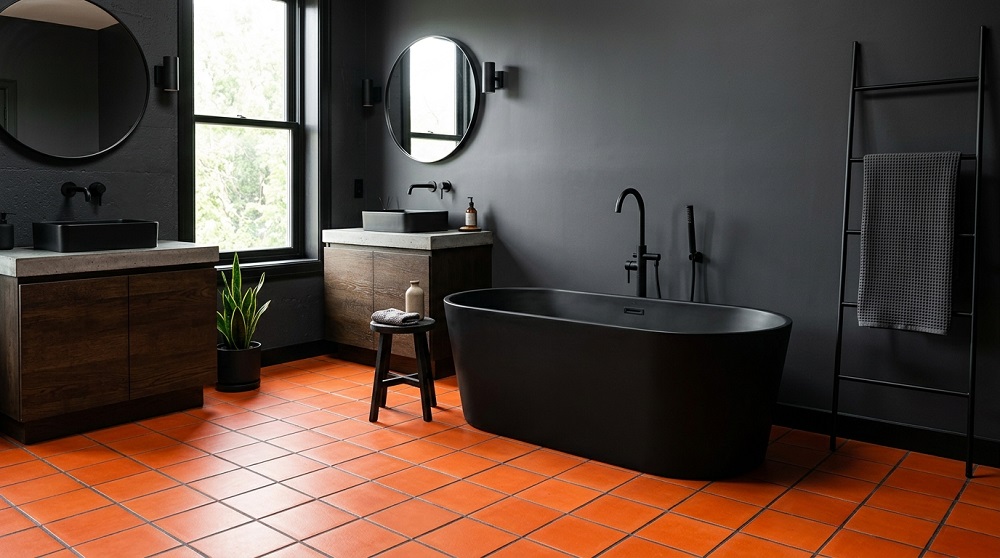
Bathrooms are the smallest rooms people renovate and among the most technically demanding. Everything happens in a few square metres, most of it involves water, and the majority of the work disappears behind surfaces you’ll never see again.
That’s the defining feature of a bathroom remodel: the parts that decide whether it lasts twenty years or fails in three are invisible when it’s finished.
Table of Contents
Waterproofing Is the Whole Job
If you take one thing seriously, take this.
A tiled shower is not waterproof. Tiles and grout are porous, and the membrane behind them is what actually keeps water out of the structure. Skip or rush that layer and you get rot, mould and a repair that costs more than the original renovation.
Non-negotiables:
- A proper tanking membrane across the shower area and up the walls
- Correct floor falls so water reaches the drain rather than pooling
- Silicone, not grout, at every junction where two surfaces meet
- Sealed penetrations wherever pipes or fixings pass through the membrane
Ventilation Is the Second Priority
Most bathroom mould problems are ventilation problems, not cleaning problems.
An extractor needs to be sized for the room volume, vented to outside — never into a loft or cavity — and ideally run on a timer for fifteen minutes after use. A window is helpful but not a substitute, because nobody opens it in winter.
Plan the Layout Around the Drain
In a bathroom, plumbing dictates design far more than taste does.
Moving a toilet is the most expensive change you can make, because the soil pipe needs a specific fall and route. Sinks and showers are more flexible. If the budget is tight, keeping the toilet where it is often frees up thousands for better finishes.
Minimum Clearances Worth Respecting
- Around 60 cm of clear space in front of the toilet
- Around 70 cm in front of the sink
- A shower enclosure of at least 90 × 90 cm to feel usable
- Door swing checked against every fitting, especially in small rooms
Where to Spend and Where to Save
Spend on: the waterproofing system, the shower valve and mixer, the extractor, the trades, and the toilet mechanism. These are hidden, hard to replace, and responsible for nearly all failures.
Save on: tiles, vanity units, mirrors, accessories and lighting fixtures. Inexpensive tiles fitted well look better than expensive tiles fitted badly.
A cheap shower valve behind a beautiful wall is a decision you’ll regret twice — once when it fails, and again when the tiles come off to reach it.
Small Bathrooms Need Different Thinking
In a compact space, a few choices do the heavy lifting:
- Wall-hung fittings free up floor area and make cleaning far easier
- Large-format tiles mean fewer grout lines and a less busy look
- Sliding or outward-opening doors recover the space a swing door wastes
- Recessed niches replace shelves that would otherwise intrude
- Continuous flooring through the shower avoids visually chopping the room up
Budget and Timeline Realities
A full bathroom remodel typically takes two to four weeks and involves several trades in sequence: strip out, first-fix plumbing and electrics, boarding and tanking, tiling, second-fix, then sealing and decoration.
Hold back 15% as contingency. Older properties routinely reveal corroded pipework, rotten floorboards or wiring that no longer meets regulations — and none of that is optional once found.
The Test of a Good Bathroom
It looks good on day one. It still looks good, and stays dry, on day two thousand.