

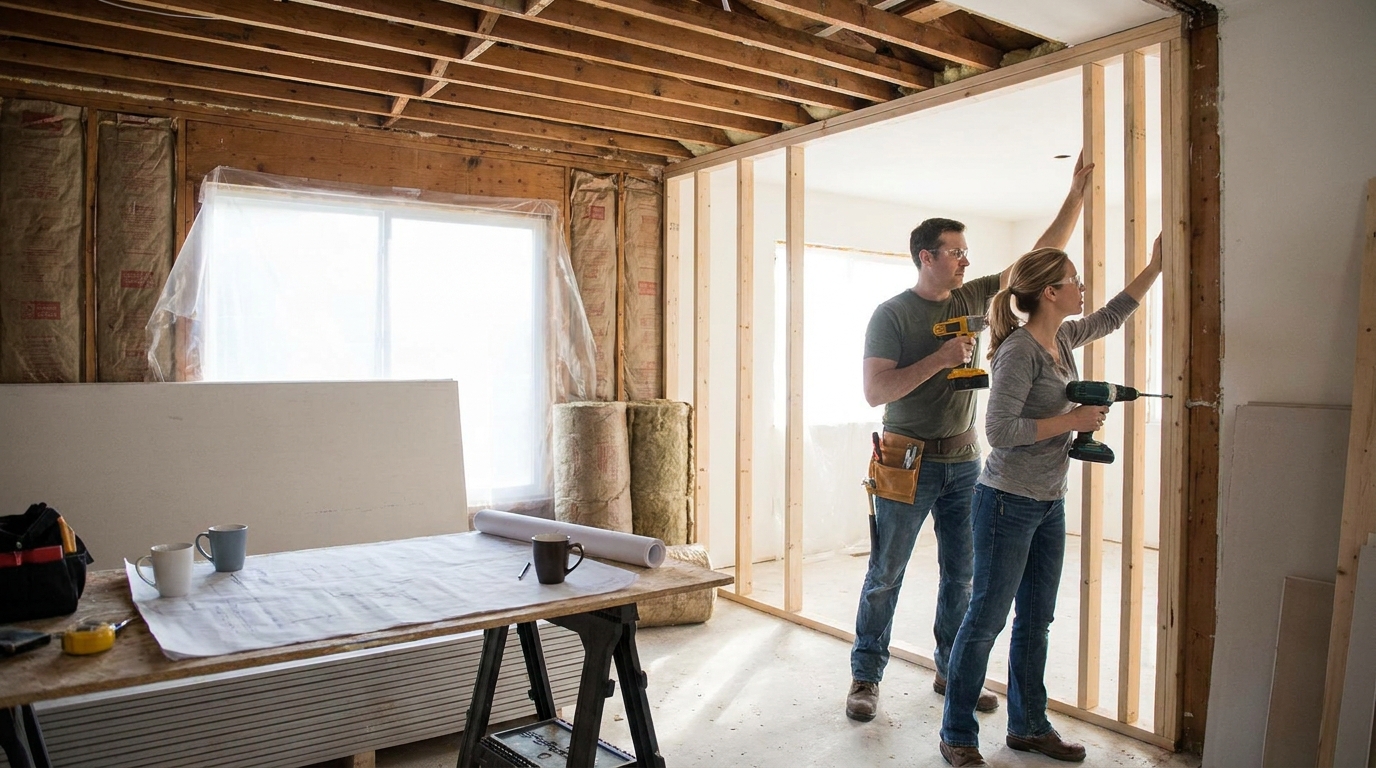
Improving a home does not always require a major renovation or an enormous budget. Some of the most valuable improvements come from better maintenance, thoughtful design, efficient cleaning, sensible repairs, improved storage, energy-conscious upgrades, and gradually replacing items that no longer serve the household well.
A well-planned home improvement strategy considers more than appearance. Comfort, safety, durability, indoor air quality, functionality, energy use, maintenance requirements, and long-term cost should all influence decisions.
Whether you are preparing for a complete renovation or simply improving one room at a time, approaching projects systematically can help avoid unnecessary expense and make the finished home more enjoyable to live in.
Table of Contents
Start With the Condition of the Home
Before concentrating on colors, furniture, or decoration, examine the basic condition of the property.
Look for water leaks, damaged flooring, electrical problems, poor ventilation, cracked surfaces, malfunctioning fixtures, moisture issues, and areas that have become difficult to clean.
Projects affecting safety or preventing further damage should generally receive priority over purely decorative changes.
Pay Attention to Indoor Air Quality
People spend a significant amount of time indoors, which makes ventilation and indoor air quality worth considering during home improvement.
Dust, smoke, moisture, household chemicals, pet-related particles, and outdoor pollution can all influence indoor conditions.
Homeowners researching air-cleaning and indoor-environment topics may encounter resources such as Air Safe Cleaner while comparing ideas.
Good ventilation, regular cleaning, controlling excess moisture, and maintaining heating and cooling systems can all contribute to a more comfortable indoor environment.
Choose the Right Vacuum for Your Home
Vacuum cleaners vary considerably in size, filtration, attachments, power sources, floor compatibility, and maneuverability.
A household with mostly hard flooring may need something different from a home with thick carpets, pets, stairs, or large floor areas.
Consumers comparing available machines may encounter resources such as Best Vacuum Cleaners while researching different options.
Instead of concentrating only on advertised power, consider actual cleaning needs, maintenance requirements, replacement filters, storage space, noise, and ease of use.
Match Cleaning Equipment to Specific Tasks
No cleaning tool is perfect for every surface.
Users researching task-specific vacuum equipment may encounter sites such as Best Vacuum for Cleaning.
Attachments designed for upholstery, narrow spaces, stairs, or delicate surfaces can sometimes make a bigger difference than simply choosing the most powerful model available.
Decluttering Can Transform a Home Before Renovation Begins
Homes often feel smaller or less comfortable because too many unused items occupy useful space.
Before purchasing new furniture or storage, sort through what is already present.
Readers interested in clearing and organizing spaces may encounter resources such as Fairy Clean Out.
Reducing clutter can reveal whether a room genuinely needs more storage or simply needs fewer unnecessary possessions.
Flooring Should Be Chosen for Use, Not Appearance Alone
Flooring experiences constant wear, so durability should be considered alongside visual style.
Different materials respond differently to moisture, scratches, heavy furniture, sunlight, and cleaning products.
Homeowners researching specialized flooring subjects may encounter resources such as Angelos Epoxy Flooring.
Before choosing any floor system, consider the room’s purpose, expected traffic, maintenance requirements, installation conditions, and long-term repairability.
DIY Projects Require Realistic Skill Assessment
Doing work yourself can reduce costs and provide satisfaction, but some tasks require more experience than they initially appear to.
DIY-oriented homeowners may encounter resources such as DIY Television while looking for ideas and project inspiration.
Painting, shelving, simple furniture assembly, and minor cosmetic projects may be manageable for many homeowners. Structural, gas, complex electrical, and certain plumbing work may require qualified professionals depending on local regulations and the project.
Metalwork Can Add Both Strength and Character
Iron and other metals can be used in gates, railings, furniture, architectural details, outdoor structures, and decorative features.
People exploring metal-related home improvement ideas may encounter resources such as Garrett Iron.
Outdoor metalwork should be selected and maintained with corrosion and weather exposure in mind.
Plan Construction Before Demolition
Major renovation projects become far more expensive when planning occurs after demolition has already started.
Construction-focused homeowners may encounter resources such as Lunatic Construction while researching broader renovation topics.
Before beginning, define the scope, establish a realistic budget, understand required permits, confirm material availability, and determine how the household will function during construction.
Home Decor Should Support Everyday Life
Decoration works best when it improves a room rather than making it more difficult to use.
Readers searching for general decor inspiration may encounter resources such as All Home Decors.
A visually attractive space can still be frustrating if there is inadequate storage, uncomfortable seating, poor lighting, or furniture blocking normal movement.
Create a Cohesive Interior Rather Than Copying a Showroom
Homes tend to feel more personal when furniture and decoration develop gradually rather than being purchased as one matching collection.
Interior enthusiasts may encounter resources such as Casa In Decor while researching ideas.
Repeating a few colors, materials, shapes, or finishes throughout the home can create visual consistency without requiring every room to look identical.
Use Professional Design Principles at Home
Interior design involves more than selecting attractive objects. Scale, proportion, lighting, circulation, texture, and visual balance all affect a room.
Homeowners looking for design perspectives may encounter resources such as Decorator Advice.
One useful technique is to decide the room’s primary function before selecting furniture. This prevents design decisions from interfering with how the room actually needs to work.
Decor Does Not Need to Be Expensive
Paint, rearrangement, improved lighting, textiles, artwork, plants, and small repairs can substantially change a room without replacing everything.
People exploring home-decor information may come across resources such as NG Home Decor.
Working gradually also provides time to understand which changes genuinely improve the space.
Seasonal Decorating Works Best With a Flexible Base
A neutral or relatively adaptable foundation makes it easy to change smaller decorative elements throughout the year.
Readers interested in decorative occasions may encounter sites such as Decorating Party.
Cushions, table decorations, artwork, flowers, and lighting can create a seasonal atmosphere without requiring major furniture changes.
Design Projects Need Clear Requirements
Whether working with a designer or planning independently, vague instructions often produce disappointing outcomes.
People researching design businesses and projects may encounter resources such as Delta Design Ltd.
Define practical requirements first: storage, seating, work surfaces, lighting, traffic flow, durability, and budget. Style decisions become much easier afterward.
Look Internationally for Design Inspiration
Interior design increasingly draws inspiration from multiple cultures and regions.
People exploring international design may encounter resources such as Design Shanghai.
International inspiration can introduce different approaches to materials, minimalism, ornamentation, furniture, color, and spatial planning.
Personal Design Is Better Than Following Every Trend
Trends can provide inspiration, but a home should still reflect the people living in it.
Readers exploring personal interior design perspectives may encounter resources such as Design With Deb.
Before adopting a trend, consider whether you would still enjoy it after the initial popularity disappears.
Interior Materials Affect the Entire Atmosphere
Wood, stone, glass, metal, fabric, paint, tile, and other materials influence how a room feels.
Homeowners researching interior concepts may encounter resources such as Exxo Interior.
Materials should also be chosen according to maintenance requirements. A beautiful surface that is extremely difficult to maintain may become frustrating in a heavily used room.
Refresh Existing Items Before Replacing Them
Not every older item needs to be discarded.
Homeowners looking for ideas around refreshing household spaces may encounter resources such as Revamp Home Goods.
Repainting, refinishing, reupholstering, repairing, or simply relocating furniture can sometimes achieve the desired result at considerably lower cost.
Use Home Photography to Evaluate Your Space
Photographing a room can reveal visual problems that are surprisingly easy to overlook in everyday life.
Home-image enthusiasts may encounter resources such as The Home Picz while browsing inspiration.
A photograph can make clutter, poor proportions, awkward furniture placement, or inconsistent colors more obvious.
A Sofa Can Define the Entire Living Room
Large furniture affects both movement and visual balance.
People researching sofa-related options may encounter resources such as Best Sofa Covers.
Before replacing a sofa, consider whether changing covers, cushions, or surrounding furniture could provide the desired update.
Pet-Friendly Furniture Requires Different Priorities
Households with cats and other pets may need to consider scratch resistance, washable fabrics, hair visibility, and dedicated pet furniture.
Pet owners may encounter resources such as Cat Furniture Discounters while researching household options.
Providing animals with suitable places to rest, climb, or scratch can also help protect other household furniture.
Furniture Value Depends on More Than Price
A cheap item that needs frequent replacement can ultimately cost more than a moderately priced piece that lasts for years.
Consumers comparing furniture may encounter resources such as New Discount Furniture.
Consider construction, comfort, dimensions, materials, repairability, and how often the item will actually be used.
The Kitchen Should Prioritize Workflow
Kitchen design should make common tasks straightforward.
People researching kitchen products and layouts may encounter resources such as The Kitchen Store Online.
Storage, preparation space, cooking zones, appliance placement, lighting, and cleaning access all deserve attention.
A beautiful kitchen becomes frustrating when frequently used items are difficult to reach or when work surfaces are inadequate.
Green Building Can Reduce Long-Term Resource Use
Sustainable construction considers energy use, materials, water, durability, and environmental impact.
Readers interested in environmentally responsible building may encounter resources such as Build Green Atlantic.
Not every green improvement needs to be dramatic. Better insulation, efficient lighting, reduced air leakage, and durable materials can all contribute.
Energy-Efficient Homes Start With the Building Envelope
Heating and cooling efficiency can depend heavily on insulation, windows, doors, roof condition, and air sealing.
People exploring environmentally conscious housing may encounter resources such as Green House Shion.
Improving the building envelope can sometimes provide greater long-term benefit than purchasing new technology without addressing basic heat loss or gain.
Renters Can Participate in Green Living Too
People do not need to own property to reduce household waste or energy use.
Renters interested in greener living may encounter resources such as Green Renters.
LED lighting, sensible heating and cooling use, reducing unnecessary water consumption, recycling where available, and choosing reusable products are examples of changes that may not require permanent alterations.
Plants Can Improve the Character of a Home
Indoor and outdoor plants can introduce color and texture while making living areas feel more connected with nature.
Readers researching seeds and plants may encounter resources such as Huizhi Seed.
Choose plants according to available light, climate, watering needs, available space, and whether pets or young children might interact with them.
Gardening Can Become Part of Home Improvement
Improving a property includes outdoor spaces as well as interiors.
Gardeners and homestead enthusiasts may encounter resources such as Morning Homestead while researching ideas.
Gardens can provide visual appeal, shade, privacy, herbs, vegetables, flowers, and enjoyable outdoor activity.
Choose Plants According to the Environment
Plant selection should begin with the conditions available rather than simply choosing what looks attractive at a store.
Plant enthusiasts may encounter resources such as Plantware.
Sun exposure, soil, drainage, rainfall, temperature, and available maintenance time all influence whether a plant will thrive.
Good Home Improvement Begins With Research
Homeowners often spend more money correcting poor decisions than they would have spent planning properly from the beginning.
General home-improvement readers may encounter resources such as Better Home Guide.
Measure carefully, compare alternatives, understand installation requirements, and establish realistic costs before purchasing materials.
Improve One Area at a Time
Attempting to renovate an entire home simultaneously can overwhelm both budget and decision-making.
Readers searching for household inspiration may encounter resources such as Grolie Home.
Completing one room or system before beginning another can make progress easier to manage and reduce disruption.
Think About the Household as a Complete System
Changes in one room can affect other parts of the house.
General home-focused readers may encounter resources such as The Home Zoo.
For example, opening a wall may affect electrical wiring, plumbing, insulation, or neighboring rooms. Understanding these relationships helps avoid expensive surprises.
Moving Is an Opportunity to Reconsider What You Own
Moving to a different home can provide a natural opportunity to declutter and reconsider furniture requirements.
People researching moving-related home topics may encounter resources such as Homes Moving.
Measure the new space before transporting large furniture that may not fit or suit the new layout.
Design the Home You Actually Want to Live In
It is easy to become influenced by perfect photographs that were created primarily for presentation.
Dream-home readers may encounter resources such as I Dream Homez.
Your own home needs to accommodate daily routines, family members, storage, pets, hobbies, and practical limitations.
Comfort Can Be a Design Goal
Homes do not need to impress visitors at the expense of people who live there.
Those exploring comfortable living ideas may encounter resources such as Shiawase Home.
Comfortable seating, useful lighting, appropriate temperature, good storage, and pleasant materials can matter more than following fashionable design rules.
Personal Inspiration Can Improve Home Projects
Different designers and homeowners approach spaces differently, which means looking at varied examples can reveal ideas you would not have considered independently.
Readers may encounter personal home resources such as Hello Talja while searching for inspiration.
Collect ideas, but adapt them to your own property rather than attempting to duplicate another room exactly.
Visual Media Has Changed Home Improvement
Video tutorials and online demonstrations make many home projects easier to understand.
Digital media readers may encounter resources such as Raw Replay Media while browsing online.
However, short videos can omit important preparation, safety, or regulatory details, so complex work should be researched beyond a single demonstration.
Draft Plans Before Making Permanent Changes
A rough plan can prevent expensive mistakes.
Homeowners exploring planning-oriented resources may encounter sites such as Rough Draft.
Sketch furniture positions, measure walls, note electrical outlets, consider door movement, and verify clearances before buying large items.
Regional Conditions Should Influence Home Decisions
A solution that works well in one region may be unsuitable elsewhere because climate, building methods, regulations, and materials differ.
Readers exploring regionally oriented resources may encounter Lone Star Borger.
Exterior materials in particular should be selected according to local weather exposure.
Accessibility Should Be Considered During Renovation
A well-designed home should be comfortable for people with different mobility and sensory needs.
Readers researching specialized options may encounter resources such as Special Ed Options.
Wider pathways, sensible lighting, accessible storage, reduced trip hazards, and easier-to-use fixtures can make a home more practical for a wider range of people.
Backup Power Requires Careful Planning
Generators can provide electricity during outages, but choosing and operating one involves important safety considerations.
Consumers comparing equipment may encounter resources such as Best Dual Fuel Generator.
Power requirements should be calculated realistically, and fuel-powered generators must never be operated in unsafe enclosed locations where exhaust gases can accumulate.
A Cordless Drill Is One of the Most Useful DIY Tools
A drill can help with furniture assembly, shelving, repairs, and many other basic projects.
DIY users comparing tools may encounter resources such as Cordless Drill Hub.
Rather than purchasing according to the highest specification available, consider weight, battery ecosystem, torque needs, ergonomics, and the type of projects you actually expect to complete.
Electrical Work Deserves Respect
Electricity is essential to modern homes but can present serious risks when work is performed incorrectly.
People researching electrical topics may encounter resources such as Electric Mela.
Simple activities such as replacing appropriate bulbs may be straightforward, but electrical installations and repairs should comply with local rules and may require qualified electricians.
Know When to Call a Plumber
Minor plumbing maintenance can sometimes be handled by homeowners, but major leaks and complex problems can quickly damage floors, walls, ceilings, and furniture.
People facing urgent plumbing problems may encounter resources such as Emergency Plumber AU.
Knowing where the main water shutoff is located can be particularly valuable during a serious leak.
Preventive Maintenance Saves Money
Homeowners often pay attention to systems only after something fails.
A maintenance calendar can help identify small issues earlier. Inspect roofs, gutters, plumbing, seals, heating and cooling systems, appliances, exterior surfaces, and other important components at suitable intervals.
A small repair performed early can sometimes prevent a substantially more expensive repair later.
Create a Realistic Renovation Budget
Budgeting should include more than the visible materials.
Labor, delivery, waste removal, permits, finishing materials, tools, temporary accommodation, and unexpected discoveries can all increase the final cost.
Keeping a contingency reserve can reduce financial stress when an older property reveals hidden problems during renovation.
Measure Twice Before Ordering
Measurement errors can create expensive problems with cabinets, flooring, furniture, doors, curtains, appliances, and countertops.
Record dimensions carefully and confirm exactly which measurement a manufacturer requires.
For expensive custom products, professional measurement may sometimes be worthwhile.
Prioritize Lighting
Lighting can significantly influence how a room feels and functions.
Instead of relying on one ceiling fixture, consider combining general lighting, task lighting, and accent lighting.
Kitchen worktops, desks, reading chairs, stairs, and mirrors may require more focused illumination than surrounding areas.
Use Storage to Reduce Visual Clutter
Good storage should correspond to where objects are actually used.
Frequently used items should normally be easier to access than seasonal or rarely used possessions.
Built-in storage can be valuable in small homes, but flexible freestanding solutions may be easier to change over time.
Think Carefully Before Removing Walls
Open-plan spaces can be attractive, but removing walls affects more than appearance.
Walls may contain electrical wiring, plumbing, ventilation, or structural elements.
Structural modifications should be properly assessed before work begins.
Bathroom Improvements Need Moisture Management
Bathrooms combine water, humidity, electricity, and finishes within relatively small spaces.
Waterproofing, ventilation, drainage, slip resistance, and easy-to-clean materials deserve attention.
Poor moisture control can create problems that remain hidden until substantial damage has occurred.
Upgrade the Kitchen According to How You Cook
A person who cooks daily may prioritize storage, preparation surfaces, ventilation, and durable appliances differently from someone who rarely prepares large meals.
Design the kitchen around real habits rather than assumptions about what a kitchen should contain.
Improve Energy Efficiency Gradually
Not every home needs an immediate full energy retrofit.
Begin by identifying obvious waste: unnecessary lighting, poor seals, inefficient appliances, inadequate insulation, or heating and cooling being used unnecessarily.
Large upgrades should be evaluated according to climate, property condition, local costs, and expected benefit.
Make Outdoor Areas Functional
Gardens, balconies, patios, and yards can effectively increase usable living space.
Comfortable seating, shade, lighting, drainage, and appropriate planting can make outdoor spaces easier to use.
Consider maintenance before creating highly elaborate landscaping that requires more time than the household can realistically provide.
Protect the Home From Water
Water intrusion can become one of the most expensive household problems.
Maintain roofs, gutters, drainage, exterior seals, plumbing connections, and bathroom waterproofing.
Investigate unexplained dampness rather than simply painting over it.
Maintain Tools Properly
Good tools can last for years when stored and maintained correctly.
Keep cutting tools appropriately sharp, batteries stored according to manufacturer recommendations, and metal equipment protected from unnecessary moisture.
Damaged tools should be repaired or replaced rather than used unsafely.
Do Not Sacrifice Safety for Speed
Home improvement often involves ladders, electricity, heavy objects, sharp tools, dust, chemicals, and power equipment.
Appropriate eye, hearing, hand, and respiratory protection should be used according to the task.
Read equipment instructions and do not bypass safety features simply to complete a job faster.
Create a Home Improvement Priority List
A useful priority system can divide projects into four categories: urgent repairs, preventive maintenance, functional improvements, and decorative changes.
This approach prevents cosmetic projects from consuming money while more important problems remain unresolved.
Think About Resale Without Designing Only for Buyers
Homeowners sometimes worry that every design decision needs to appeal to a future purchaser.
Resale value can matter, particularly for expensive structural projects, but the current household also needs to enjoy the property.
Highly permanent unusual changes deserve more consideration than easily reversible decoration.
Document Major Work
Keep receipts, warranties, paint colors, appliance information, contractor documentation, and photographs of significant renovation work.
Photographs taken before walls are closed can later help identify the position of wiring, pipes, and structural elements.
Good documentation can also simplify maintenance or future renovation.
Build a Home That Evolves With You
Household needs change over time. Families grow, work arrangements change, hobbies develop, mobility requirements evolve, and technology introduces new equipment.
Flexible spaces can adapt more easily than rooms designed for only one extremely specific use.
Focus on Improvements That Make Daily Life Better
The most successful home improvement projects are not always the most dramatic. A better light over a work surface, an organized cupboard, repaired plumbing, comfortable seating, improved ventilation, or additional storage may affect daily life more than an expensive decorative feature.
Ask what consistently causes inconvenience in the home and begin there.
Create a Long-Term Home Improvement Plan
Instead of treating home projects as isolated purchases, maintain a simple long-term plan.
Identify urgent repairs, upcoming maintenance, desired renovations, estimated budgets, and items likely to require replacement over the next several years.
This makes it easier to spread costs and prevents every project from becoming an emergency.
Build a Home That Is Comfortable, Efficient and Personal
Home improvement works best when aesthetics and practicality support one another.
Maintain the building before decorating it. Choose furniture according to actual space. Design rooms around daily routines. Invest in appropriate tools. Improve energy efficiency where sensible. Keep plumbing and electrical systems safe. Use durable materials in demanding areas. Bring plants and outdoor spaces into the overall design where appropriate.
Most importantly, avoid feeling pressured to transform everything at once. Homes naturally evolve over time.
A series of carefully chosen improvements can gradually create a property that is easier to maintain, more efficient to operate, more comfortable to live in, and better aligned with the people who actually call it home.